Mattress flexibility · Adjustable beds
Will a Latex Mattress Bend Safely on a Motion Bed?
A latex mattress can often move with an adjustable bed, but “latex” alone does not settle the question. The layers, their thickness and arrangement, the mattress’s construction, and the bed maker’s instructions all matter. Before raising the head or feet, it is worth treating the mattress and base as a pair of mechanical parts—not two independent purchases that happen to share a bedroom.
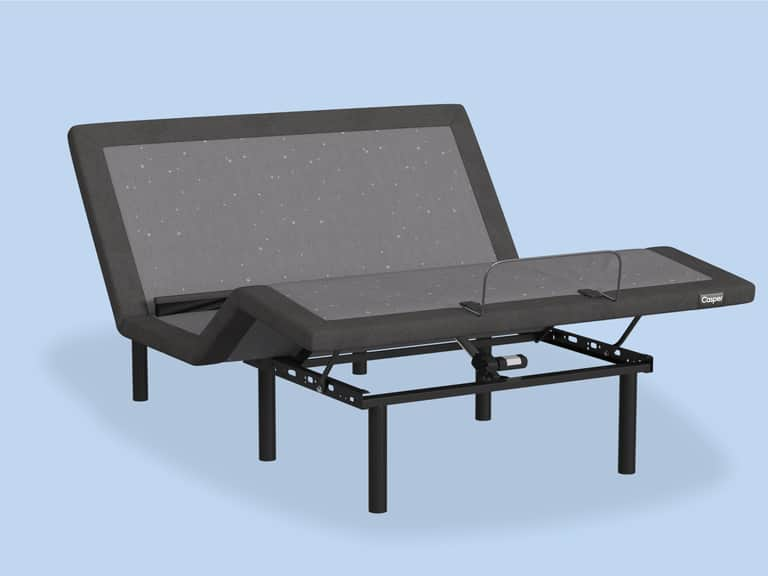
There is a small drama in an adjustable bed. At the touch of a button, a flat sleeping surface becomes a slope; the head rises, the knees lift, and the mattress is asked to change its shape without making much of a fuss. Some materials take this assignment readily. Others, depending on how they are built, may resist, bunch, shift, or place strain on seams and internal layers. Latex has a reputation for springiness, and for good reason, but resilience is not a universal compatibility certificate.
The useful question is not simply whether latex bends. It is whether this particular latex mattress can bend in the way this particular motion bed asks it to bend, repeatedly and within the mattress maker’s stated limits. That answer comes from construction details and manufacturer guidance, not from a material label by itself.
Why latex seems suited to movement
Latex is elastic: under pressure, it compresses and tends to recover its shape. That quality can help a mattress respond as an adjustable base changes position. Unlike a rigid panel, a flexible comfort layer can accommodate a curve; unlike a material that stays compressed, resilient latex may return toward its original profile once the bed lies flat again.
But a mattress is not a single block of one material. It is an assembly: comfort layers, support layers, covers, quilting, adhesives or other joining methods, and sometimes a substantial perimeter or internal reinforcement. Each part contributes to how the whole mattress behaves. A flexible upper layer cannot necessarily make a thick, firm support core equally flexible. Nor does a supple feel in a showroom establish how a full-size mattress will behave when lifted at the head and foot.
Think of the mattress as a layered structure rather than a slab of latex. Its ability to follow a moving platform depends on where it bends, how much resistance it offers, and whether its layers remain aligned while doing so. The bed’s hinge locations and range of motion matter, too. A motion base does not merely tilt a mattress; it changes the support beneath it, creating different curves and pressure points as it moves.
Construction details worth checking
Before setup, gather the exact mattress model name and, if available, its construction specifications. “Latex mattress” may describe a mattress made largely of latex, one with latex comfort layers over another support material, or a hybrid with springs and latex. Those designs may behave differently on an adjustable bed. Even within a single material family, layer thickness, firmness, and overall build can influence flexibility.
- Layer thickness and arrangement: A mattress with several thick or firm layers may resist bending more than a construction designed to flex. Ask the maker how the complete mattress—not just its latex component—responds to adjustable positioning.
- Support core: Find out what lies beneath the comfort layers. A dense core, reinforced perimeter, or other structural component can affect how the mattress follows the base.
- Joining and quilting: Covers, quilting, and connections between layers are part of the assembly. The mattress maker is best placed to explain whether these features are intended for repeated articulation.
- Mattress size and configuration: Size and split arrangements can affect fit, movement, and the way two sides meet. Confirm the dimensions and configuration specified for the base.
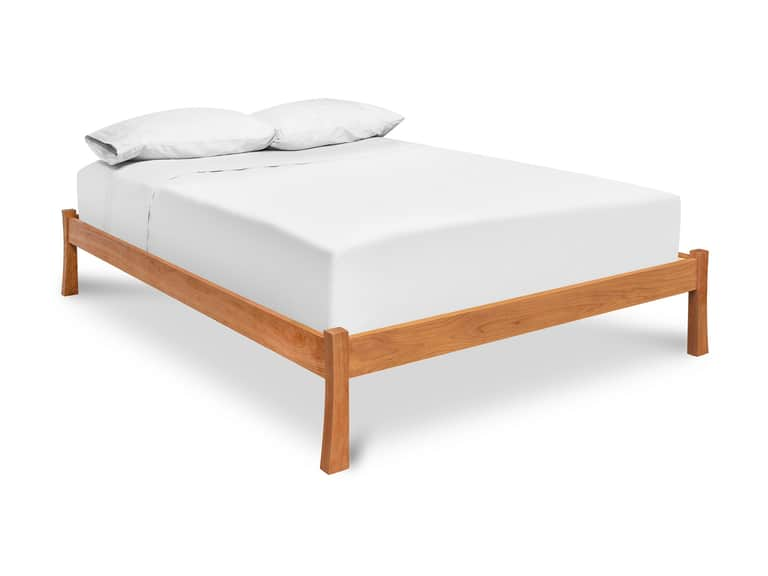
- Bed-frame requirements: Some adjustable bases are designed to sit inside an existing frame; others have particular clearances or support requirements. Confirm the complete setup, including frame, base, mattress, and any retaining features.
Specifications can be difficult to interpret without context. A phrase such as “flexible latex” may describe feel rather than a tested ability to operate on a powered base. Likewise, a product page that lists adjustable positioning does not necessarily establish compatibility with every latex mattress. The maker’s written guidance for the exact models is more useful than a broad category claim.
What “safe” should mean here
In everyday conversation, “safe” can mean several things. A mattress might be physically capable of bending, yet still be outside the base manufacturer’s approved configuration. It might operate without immediate visible damage but shift enough to be uncomfortable. Or the mattress and base may fit together while failing to meet warranty conditions. These are different questions, and it helps to separate them.
For a sleep system, a practical definition of safe compatibility includes manufacturer approval, stable placement, unobstructed movement, and no signs of damage or unusual strain during ordinary operation. It also means using the base within its stated limits and following its setup instructions. The mattress should not be forced into a position its maker excludes, and the base should not be modified to accommodate a mattress without explicit approval.
This is not a substitute for the manufacturers’ instructions, nor a prediction about a specific product. If either maker does not clearly address compatibility, contact both with the exact model names and ask for a written answer. A vague assurance that “most mattresses work” is not as helpful as confirmation that the specific mattress is approved for the specific base.
A careful compatibility check, before the first adjustment
Start on paper, while the mattress is still on its original foundation or before the new base is assembled. It is easier to resolve a mismatch before the bed is in place, wired, dressed, and apparently settled into the room. Keep the product documentation nearby, and check that the names and model numbers match the items you actually have—not a similar model in the same product family.
- Read both manuals. Look for language about adjustable bases, mattress types, size limits, weight limits, required retainers, and excluded configurations. Note any restrictions rather than relying on a quick scan of a product description.
- Ask the mattress maker. Provide the full model and construction, then ask whether it is approved for the base’s type of movement and range. If the mattress has changed since an earlier version, make sure the answer concerns the current construction.
- Ask the base maker. Share the mattress model, dimensions, and weight if requested. Confirm that the base is intended to support that type and size of mattress, and ask whether a particular retainer or setup is required.
- Check the physical platform. Follow the base instructions for placement and assembly. Ensure that the mattress is centered, the mechanism has clearance, and cords or bedding cannot catch in moving parts.
- Test gradually. With the area clear, operate the base through a modest adjustment first. Watch the mattress edges and surface as the platform moves. Avoid leaning on or holding down a section to make it conform.
- Return it to flat and inspect. Check for unusual sliding, bunching, separation, noises, or visible damage. If anything seems abnormal, stop and consult the manufacturers before continuing.
Testing is not a way to override a stated restriction. If the mattress maker says not to use the mattress on an adjustable base, a successful first movement does not make the combination approved. Nor does a quiet test prove long-term durability. A brief check can reveal obvious fit problems; it cannot replace compatibility guidance.
What to notice while the bed moves
During a cautious first test, pay attention to the mattress’s relationship with the platform. Does it remain centered? Does the surface follow the base without abrupt folds or visible strain? Do the head and foot sections move freely, with no bedding or cables trapped nearby? These observations are useful, but they are not a technical evaluation of internal stress. A mattress can look smooth on the outside while its maker’s restrictions still apply.
Some movement of bedding is ordinary: a fitted sheet may pull slightly as the sleeping surface changes shape. Persistent mattress migration, however, merits attention. So do new noises, a pronounced ridge at a hinge, a cover that appears to pull tight, or layers that seem to move independently. Stop the base rather than repeatedly cycling it to see whether the symptom goes away. Then check the manuals and contact the relevant manufacturer.
Do not try to solve a fit problem by adding improvised straps, wedges, boards, or restraints. A mattress retainer, when supplied or specified for the base, is different: it is part of the manufacturer’s intended setup. Unapproved additions can interfere with the motion mechanism or create pressure where it was not designed to bear it.
Warranty and documentation are part of the design
Warranty language can seem like the least interesting part of a bed, until a question about coverage arises. Mattress and base warranties may set conditions about foundations, support, use, or compatible equipment. Read the terms for both pieces. If compatibility is confirmed by customer service, keep the response, along with the manuals, receipts, and model information.
It is also sensible to record the mattress’s condition before installation and to follow any care or rotation guidance that applies. Adjustable use may change how a mattress is supported from moment to moment; it does not erase ordinary maintenance requirements. Conversely, do not assume that a routine such as rotating a mattress is appropriate for every design. Follow the maker’s instructions for the exact model.
For a base with multiple features, distinguish between its capabilities and its compatibility claims. A model such as the Adjustable Base Pro is described as offering head and foot adjustment, among other positioning features. That description tells you what the base can do; it does not, by itself, certify every latex mattress for use with it. The mattress and base manufacturers remain the authorities on the pairing.
When the answer is unclear
Occasionally, the documentation will say nothing specific about latex, or the two manufacturers will offer different answers. In that case, do not treat silence as approval. Send each company the other product’s exact model details and ask whether the combination is permitted, whether any restrictions apply, and whether the response affects warranty coverage. If the mattress is a hybrid or has a special internal structure, say so; the word “latex” may not tell the whole story.
If the companies cannot provide a clear answer, consider waiting to operate the base until the question is resolved. That may feel overly cautious in a purchase process built around convenience, but it is less troublesome than discovering after repeated use that the two products were never intended to work together. An adjustable bed is a system. Its parts should be chosen and checked as a system.
A useful way to think about flexibility
Flexibility is not merely softness. A mattress may feel yielding when someone presses a hand into its surface and still have a construction that resists a particular bend. The reverse can also be true: a supportive mattress may accommodate articulation because its layers and joints are designed to move together. What matters is the behavior of the whole mattress on the whole base, within the motion and support conditions intended by their makers.
That distinction helps keep the decision practical. Rather than asking whether latex, in the abstract, is suitable for an adjustable bed, ask whether the named mattress has been approved for the named base. Then confirm the installation details, test cautiously, and stop if the mattress shifts or shows signs of strain. There is no prize for making a mechanism travel through its full range simply because a button is available.
The short answer
A latex mattress may bend appropriately on a motion bed, and its elasticity can be an advantage. But latex composition alone does not guarantee a safe or durable fit. Layer thickness, support-core design, mattress construction, base geometry, and manufacturer limits all play a part. The reliable route is straightforward: identify the exact models, consult both sets of instructions, get confirmation when the documents are unclear, and test the approved setup gently before regular use.
In a bedroom, the moving bed can make adjustment look effortless. Underneath that quiet motion is a small engineering arrangement, asking a mattress to flex in a particular way. The wiser the match between its parts, the less anyone needs to think about the mechanics—and the more the bed can simply do what it was meant to do.